
Clay Tile Roof Repair vs. Replacement in Dallas–Fort Worth
A leaking clay tile roof does not automatically need all-new tile. The decision depends on the tile itself, compatible replacement pieces, the condition beneath it and the access needed to make a lasting repair.
For Dallas–Fort Worth homeowners and institutional property owners, compare three possible scopes: targeted repair, removal and reinstallation of serviceable tile, or replacement. Velco’s church restorations illustrate why tile selection, metal details and occupied-building planning belong in that decision.
When can a clay tile roof be repaired?
Targeted repair may suit localized broken or displaced tile, an isolated flashing defect or a limited waterproofing problem when the surrounding roof remains serviceable and compatible parts are available.
Lift and relay means removing tile to address underlying components, then reinstalling pieces found suitable for reuse. It is a different scope from changing a few broken tiles and should account for handling losses and replacement stock.
Replacement may be appropriate when damage, failing components, incompatible repairs or unavailable matching pieces make retention impractical. Age or a leak alone is not enough to choose among these options; the recommendation should identify the observed conditions.
Identify the tile before ordering replacements
Record the profile, dimensions, thickness, exposure, color blend and surface texture, along with any accessible maker’s marks. A similar color does not establish that a replacement will fit the existing courses, interlocks or trim.
Ludowici describes matching historic tile from existing samples, including custom profiles and finishes. Its Renovation QuickShip program supplies selected profiles and colors for smaller repair quantities. Confirm the actual match, quantity and current lead time before promising a repair date; the program name is not a delivery guarantee.
Look beneath the tile and at the transitions
Tile condition is only part of the roof assessment. Review accessible underlayment, fasteners, battens where present, decking, valleys, eaves and roof-to-wall or chimney flashings. Note where selective access is needed to establish concealed conditions.
The National Park Service’s clay tile preservation guidance (PDF) explains that tile can outlast its fastening system. Sound-looking tile does not establish that the assembly underneath remains serviceable. A proposal should identify the layers and metal details being renewed, retained or investigated further.
Plan tile reuse and warranty terms together
For a historic roof, evaluate serviceable original tile before discarding it. A reuse scope should document the existing pattern and blend, handling and storage, pieces unsuitable for reinstallation, and the allowance for breakage or missing fittings.
Reuse does not automatically carry the same warranty as an entirely new roof. Ludowici’s published FAQs place restrictions on blending new and existing tile on the same roof plane for its material warranty. Confirm the proposed layout and written coverage with the manufacturer before agreeing to the work. Tile material coverage and coverage for waterproofing, flashing and installation are separate questions.
What Velco’s restoration projects demonstrate
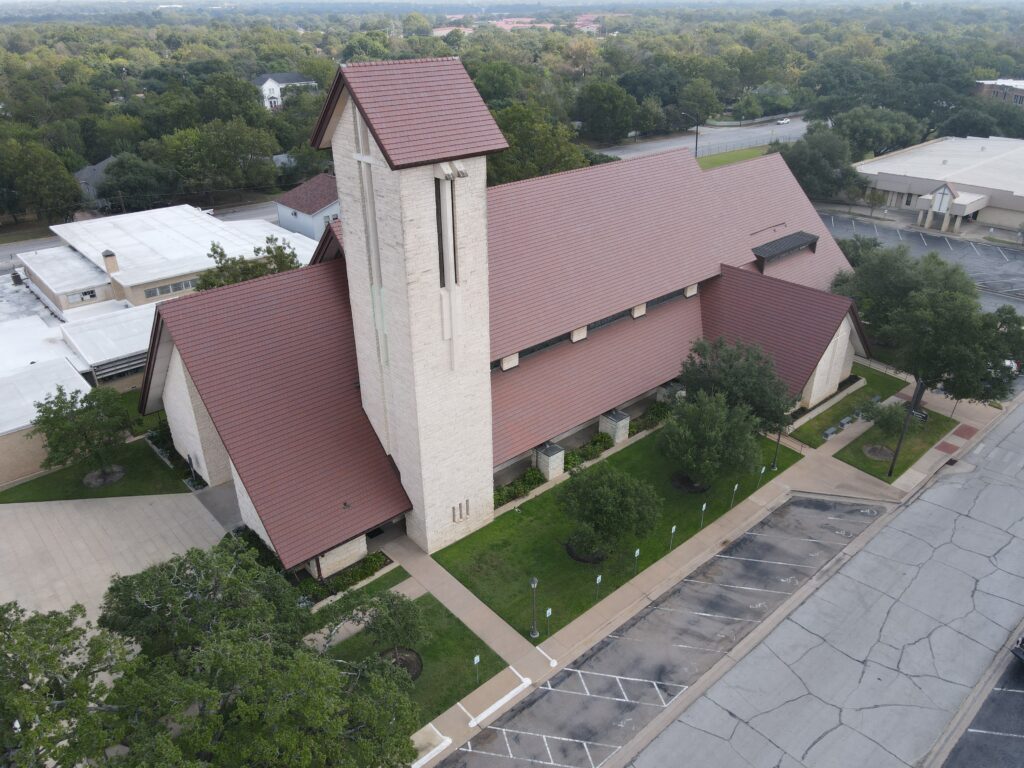
Saint Joseph Church & School — Bryan, Texas. The $1.4 million restoration included hand-blended Ludowici clay tile, custom copper gutters and fascia, upgraded insulation and protected work around an operating church and school. Access to the seven-story bell tower was part of the project. See Saint Joseph construction photographs and the signed reference.
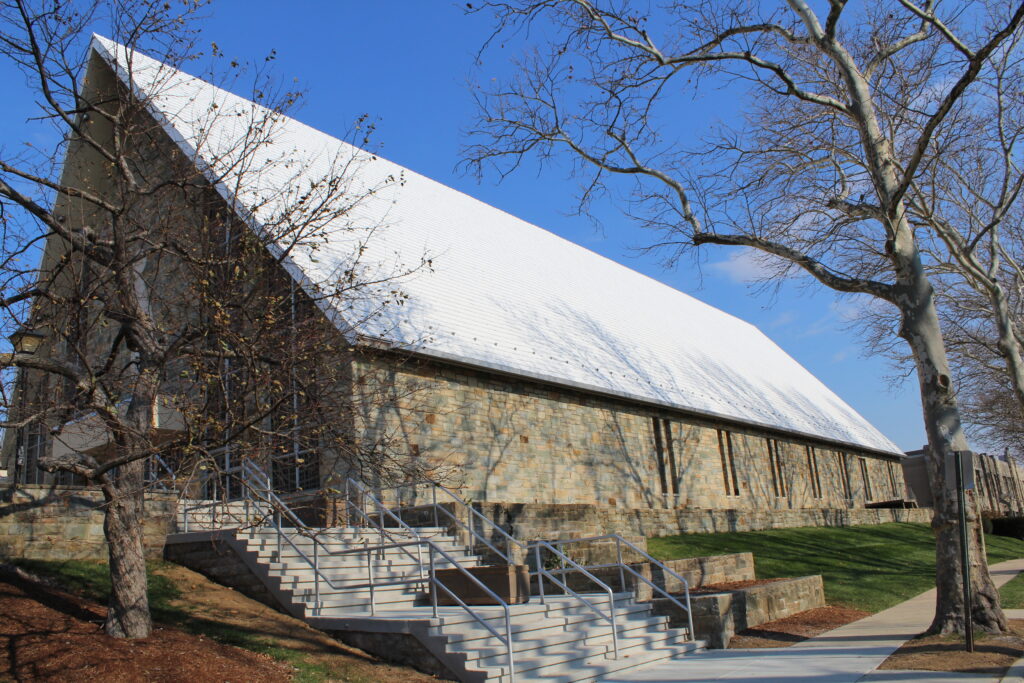
Sacred Heart Church & School — West Reading, Pennsylvania. Following hail damage, Erik Larsen coordinated handmade Ludowici tile production and roof replacement. The project included polished stainless-steel gutters and snow protection details. See Sacred Heart restoration details and its original reference.
These projects show the planning behind specialty tile work; their locations and scopes are specific. They do not establish that another roof needs replacement or that the same project budget applies.
Compare the full scope, access and disruption
Request separate descriptions of tile supply, removal and salvage, underlayment, deck repairs, flashing, gutters, disposal and temporary protection. Identify concealed-condition allowances and exclusions so proposals can be compared on the work included.
For homes, churches and schools, discuss protected entrances, delivery and storage areas, scaffolding, daily weather protection and occupied-building schedules. Custom tile production and sample approval may affect sequencing. Historic designation or an architectural review process should be checked with the applicable authority or association before work begins.
Questions to ask before choosing the work
- What conditions support targeted repair, tile reuse or replacement?
- How will replacement pieces fit the existing tile and trim?
- What remains unknown beneath the tile, and how will it be assessed?
- What removal losses, underlying repairs and metal details are included?
- How will access, temporary protection and the property’s normal use be managed?
- Which written manufacturer and workmanship terms apply to this exact scope?
Start with a Roof Condition Report and a scope based on your property. Erik Larsen completed Ludowici factory training; review Velco’s credentials and project evidence alongside the proposal. For related questions, visit the Roofing FAQ.
Preservation and manufacturer references
National Park Service: Preservation Brief 30 — historic clay tile roofs (PDF)
Ludowici: historic tile matching · Renovation QuickShip · Product and warranty FAQs
Preservation guidance informs repair planning. The actual assembly must also follow applicable project requirements and current manufacturer instructions.