Commercial Roof Repair, TPO Recover or Replacement in DFW
A commercial roof does not need a full replacement simply because it leaks, and a new TPO membrane cannot make a damaged roof assembly sound. For Dallas–Fort Worth property managers and building owners, the decision starts with the existing covering, moisture, deck condition, drainage and the work needed to keep the property operating.
This guide compares targeted repair, recover and replacement. Velco’s Diesel Works retrofit and Woodmont headquarters reroof show why two commercial properties can require very different scopes.
Repair, recover and replacement mean different work
Targeted repair: Correct a defined defect, such as a damaged flashing or localized membrane opening, while retaining the serviceable roof. The findings should explain why that limited scope addresses the problem.
Recover or retrofit: Retain suitable existing roof components and install an approved new assembly above them. A TPO recover is not simply a membrane laid over whatever is already there.
Replacement: Remove the specified existing materials, expose and address underlying conditions, and install the new assembly. The proposal should identify the removal limits and deck-repair allowances.
What must be checked before a TPO recover?
Identify the existing roof type and layers, attachment, insulation and deck. Check whether the retained components can support the proposed system, and establish how moisture and concealed damage will be assessed. The visible surface alone does not establish the condition below it.
Versico’s recover guidance calls for wet or damaged insulation to be removed and replaced. Widespread deterioration, deck damage or an unsuitable substrate can change the recommendation. Confirm the applicable structural, building and energy requirements with the appropriate design professionals and jurisdiction.
An existing modified-bitumen or built-up roof is not automatically a tear-off or a recover candidate. Manufacturer-approved assemblies differ by substrate, separation or cover board, attachment and condition. The proposed scope should name the complete compatible system.
A metal-roof retrofit needs its own assembly
A suitable metal roof may be a candidate for TPO retrofit. Versico’s metal-retrofit literature describes insulation fitted between panel ribs, with additional insulation or cover board as specified to support the membrane. Attachment must suit the existing structure and the selected assembly.
Review corrosion, panel and support condition, fasteners, penetrations, roof edges and water shedding before choosing that route. New insulation and membrane do not correct structural deterioration or an unresolved drainage problem by themselves. Energy or comfort improvements should be evaluated for the building; they are not a guaranteed utility-bill reduction.
Two Velco projects, two different scopes
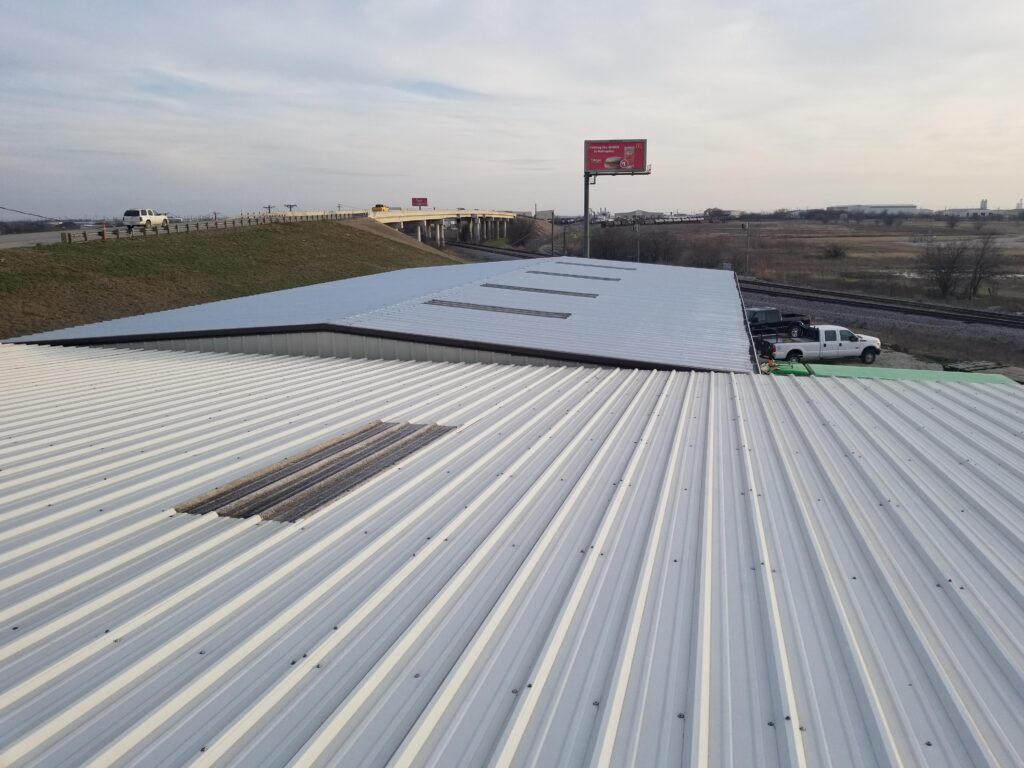
Diesel Works — TPO retrofit over metal. After hail damage, Velco installed a TPO retrofit over the existing metal roof, replaced guttering and repainted the exterior. The selection addressed insulation, heat transfer into the shop and the roof’s low pitch. These are the project’s documented design goals, not a measured energy-savings claim. See Diesel Works before and during the retrofit.
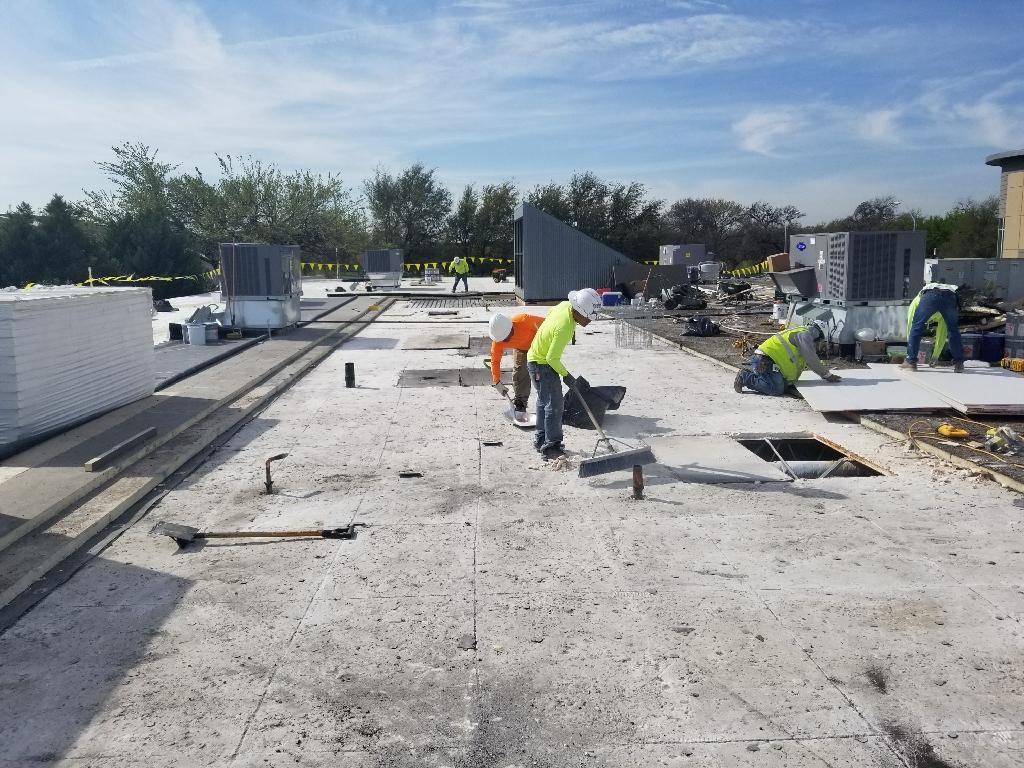
The Woodmont Company — reroof with deck repairs. At the occupied Fort Worth headquarters, leaks had deteriorated gypsum deck panels. Velco replaced affected panels one at a time, coordinated HVAC, electrical and plumbing work, and installed 4 inches of polyiso with a fully adhered 60-mil GAF TPO membrane. See the Woodmont deck-replacement sequence.
Compare insulation, drainage and occupied-building access
Ask how the scope handles retained versus new insulation, roof slope, drains or gutters, rooftop equipment and flashings. Increasing insulation thickness can affect curb and edge details; adding a new membrane should not leave those transitions unresolved. Use the selected manufacturer’s current specifications for the actual assembly.
For an occupied property, discuss delivery routes, parking, tenant notices, noise and odor, work hours, temporary weather protection and coordination with other trades. Woodmont demonstrates one approach to sequencing work above an operating office; each property needs its own plan.
Compare lifecycle cost, not just the first proposal total
A recover can reduce some removal and disposal work when the existing roof is suitable. It still needs a complete scope for preparation, wet-material removal, insulation, drainage, attachment and flashings. Replacement can involve more removal work while allowing underlying conditions to be addressed.
Ask each bidder to separate known work, concealed-condition allowances, deck repairs, disposal and any exclusions. Then compare expected maintenance, repair access, warranty requirements and the owner’s holding or capital-planning horizon. Warranty length is not a prediction of remaining service life, and one price per square foot cannot describe every roof.
Build the decision into the property’s roof plan
A useful recommendation separates urgent water-entry or safety concerns from items to monitor and work to budget. Record the evidence behind the recommendation, what was accessible, unresolved conditions and any further investigation needed before a fixed construction scope.
Use Velco’s commercial roof asset planning guide to organize those findings. The commercial sample findings online show how the report communicates a particular property’s conditions; it is not a universal replacement recommendation.
Questions to ask before approving the work
- What evidence supports repair, recover or replacement on this roof?
- What remains in place, what is removed, and how are moisture and deck conditions addressed?
- Which insulation, cover board, membrane and attachment form the proposed system?
- How will drainage, equipment transitions and tenant operations be handled?
- What allowances, exclusions, maintenance obligations and warranty terms apply?
Velco provides commercial roofing and Roof Condition Reports for property managers, asset managers and building owners across Dallas–Fort Worth. Start with the property’s actual conditions and operating needs.
Manufacturer references
Versico: Commercial Roofing Recover Options and design considerations
Versico: TPO Metal Retrofit Systems
GAF: Commercial roof recover considerations
These references explain system options. Current project specifications, manufacturer acceptance and applicable local requirements govern the selected assembly.