Natural Slate vs. Slate Select Roofing in DFW
Natural slate is quarried stone; Slate Select is a manufactured, glass-fiber-reinforced cement roofing product. Both appear in Velco’s specialty portfolio, but their specifications, repair pieces and warranty terms are different. Start with the exact material and the complete roof assembly before comparing proposals.
Start with the material, not the slate appearance
Natural slate: A stone roof varies with the quarry, slate type, thickness, dimensions and weathering characteristics. For repairs, matching those details matters as much as the color.
Slate Select: The manufacturer describes a cement-based product reinforced with glass fibers and molded from natural slate. Its color blends, dimensions and installation requirements are product-specific. It is not quarried stone.
Other manufactured slate: “Synthetic slate” is not one material. For example, DaVinci’s Inspire Slate uses resins. Do not transfer a weight, test result or warranty from a polymer product to Slate Select, or from one product line to another.
Compare actual Velco roofs
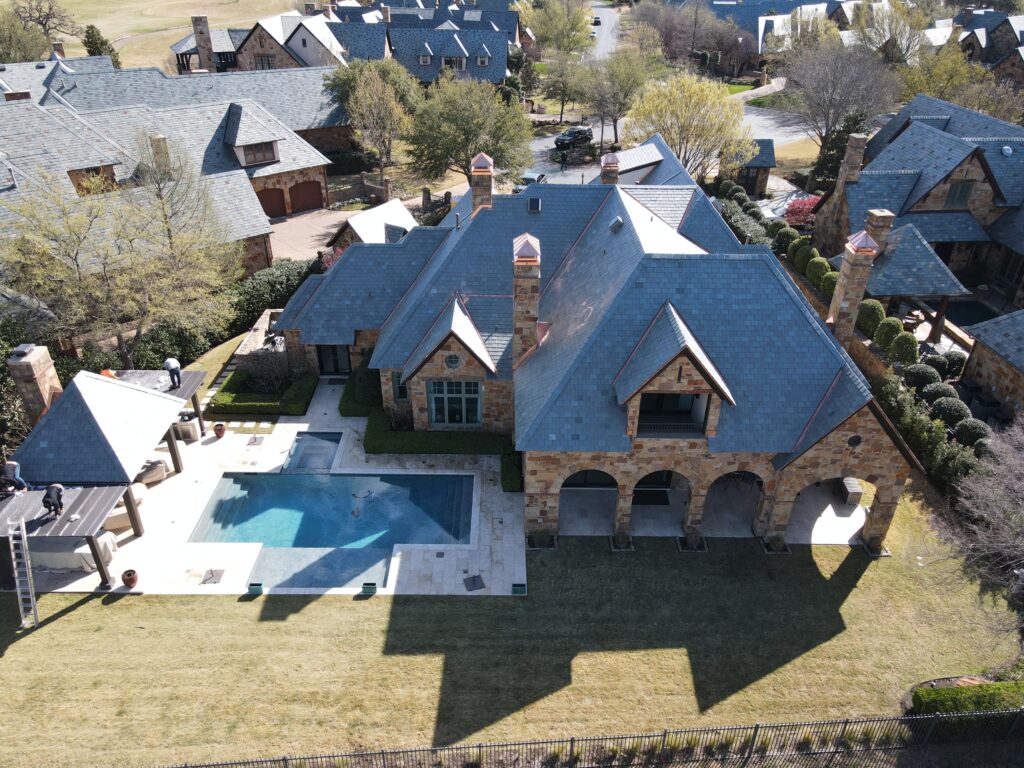
For natural stone, see the Lancaster Residence and Skoog Residence in Vaquero Estates, Westlake. Both project accounts show Vermont natural slate, with progress and completed-roof photographs. The Whitbeck Residence adds a close-up of the copper half-round gutter beside the natural slate roof.
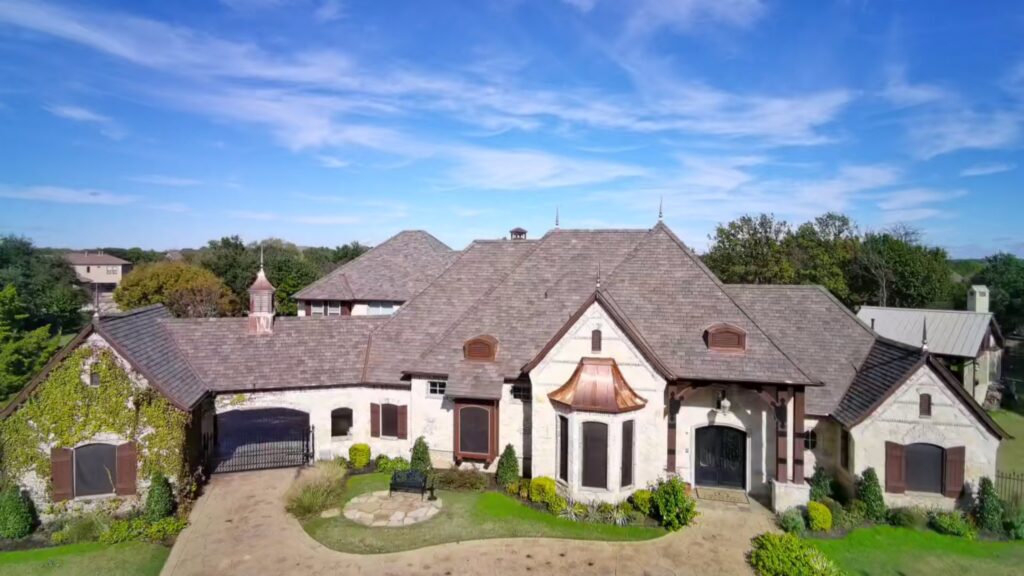
For Slate Select, see the Cressman Residence and Van Wyckhouse Residence in Château du Lac, Flower Mound. These roofs use custom multicolor Slate Select with copper details. Compare texture, coursing and transitions in the actual photographs.
Weight and installation need a roof-specific check
Ask for the proposed roof’s installed load, including the selected exposure and assembly. Slate Select’s published technical data lists 750–800 pounds per roofing square; one square covers 100 square feet. It should not be assumed to be as light as an asphalt shingle or polymer slate.
Natural slate thickness and layout also affect weight. Existing framing, decking and the proposed assembly need review before changing materials; structural advice may be needed. The proposal should identify underlayment, fastening, headlap or exposure, valleys, wall and chimney flashings, and roof-edge details.
Repairability and maintenance
The National Slate Association describes individual natural-slate replacement and matching by slate type, size, weathering, shape and texture. A small replacement piece that looks similar can still compromise the required overlap.
For Slate Select, identify the exact product and available matching pieces, then follow its installation guidance. For either roof, review damaged pieces, flashings, drainage and previous repairs together. A leak does not establish that the entire covering has failed, and roof age alone does not settle repair versus replacement.
Service life, warranty and North Texas storms
Natural-slate service life varies with the stone and the roof system. The National Slate Association identifies installation, slope, exposure, foot traffic and maintenance among the factors affecting longevity. A single lifespan figure cannot describe every existing roof.
Manufacturer warranty duration is a contract term, not a prediction of useful roof life. Compare coverage, exclusions, proration, labor and transfer conditions for the exact proposed product.
For hail and wind questions, request current product-specific test or approval documents and applicable warranty terms. Similar appearance does not establish equal impact performance. After a storm, document the actual roof conditions before selecting the repair scope. Hail size alone does not establish the condition of a particular roof.
What drives the installed cost?
Compare complete scopes rather than a material-only price. Roof area, pitch, height, turrets, dormers and access affect handling and labor. Removal, disposal, deck repairs, underlayment, copper work, gutters and site protection can change the total substantially.
Ask each proposal to separate the named roof product and installation scope from allowances for concealed conditions. Include matching or salvage work, replacement-piece availability and future repair access in the discussion. Velco provides a property-specific estimate after reviewing the roof and proposed scope.
Questions to bring to your Roof Condition Report
- What is the existing material, and what evidence supports repair or replacement?
- What exact product, thickness, exposure and assembly are proposed?
- How will load, access, flashings and concealed conditions be addressed?
- Which warranty applies, and what does the quoted scope include?
Velco’s residential Roof Condition Report uses a 54-point evaluation. Read the residential sample findings online or request a review of your home’s roof.